


_edited_j.jpg)
Hormones and Health: Understanding the hormonal changes affect energy, strength, mood and body composition – especially during peri- and post-menopause.


Welcome to today’s episode, where we’re diving into a subject that’s often talked about in whispers, or reduced to one-liners in the media — but actually, it deserves a proper, honest, evidence-based conversation.
We’re talking about hormones and health.
Now, before you switch off and think “oh, this is just about hot flushes or testosterone boosters,” let me reassure you — hormones are not just about reproduction, sex, or menopause. They are whole-body regulators. They affect your heart, your bones, your muscles, your sleep, your mood, your motivation, even how hungry you feel after a poor night’s rest.
Here’s a did you know to kick things off: did you know that the risk of heart disease in women is significantly lower than in men — right up until menopause? And then, within about 5–10 years of that hormonal shift, women’s risk catches up and in some cases overtakes men’s. That’s not a coincidence. That’s hormones at work.
So, what I want to do today is take you on a journey through the key hormones that shape our health across life. We’ll talk about oestrogen, progesterone, testosterone, insulin, cortisol, and a few others along the way. We’ll look at what the science — not the headlines — tells us. And then, crucially, we’ll talk about what we can do about it.
Because this isn’t about doom and gloom, it’s about understanding, adapting, and thriving.
Part 1: Hormones Across the Lifespan
Hormones such as oestrogen, progesterone, and testosterone play vital roles across the lifespan in both men and women. They don’t just switch on at puberty and switch off at menopause. They are present from before birth right through to old age, influencing cardiovascular health, bone strength, cognitive function, metabolism, and emotional wellbeing.
But — and this is the crucial point — their levels change. They rise, fall, fluctuate. In women, the changes are sharpest and most dramatic during peri-menopause and post-menopause. In men, the decline is slower and more gradual, sometimes referred to as andropause.
These hormonal shifts contribute to what many people experience as “midlife changes.” Sometimes these are obvious — hot flushes, night sweats, loss of libido. Sometimes they are subtle — brain fog, reduced motivation, slower recovery from exercise, or new stubborn weight around the middle.
Let’s break down the big three first — oestrogen, progesterone, and testosterone.
Oestrogen: The Protector
Oestrogen is often typecast as the “female hormone.” But in reality, men produce it too, just at lower levels. And it’s not just about reproduction.
Oestrogen supports vascular elasticity — the ability of blood vessels to expand and contract. It supports bone density, helping to maintain a balance between bone-building and bone-breakdown cells. It supports brain function — influencing neurotransmitters like serotonin and dopamine. It even plays a role in insulin sensitivity, helping the body use glucose more effectively.
So when oestrogen levels drop, as they do sharply in menopause, the consequences ripple through multiple systems.
The ESHRE Capri Workshop Group published a major review in 2006 on hormones and cardiovascular health in women. Their findings were clear: while women are protected against heart disease during their reproductive years, that protection fades rapidly after menopause. Rates of myocardial infarction and stroke rise, and within a decade women’s risk looks very similar to men’s.
Now, this doesn’t mean oestrogen is some kind of magic shield, but it does show us how powerfully hormones interact with the cardiovascular system. The review also pointed out something important: giving women hormone therapy after menopause doesn’t always reduce the risk of heart disease, especially if it’s started late. Timing matters, and the presence of pre-existing vascular damage matters. So, hormones are not a panacea.
But here’s a practical point — when oestrogen falls, lifestyle factors like exercise, diet, and sleep become even more important. You can’t change the decline, but you can change the environment those hormones are working in.
A quick anecdote: I had a client, let’s call her Sarah, who was 52 and active. She ran three times a week and ate what most people would consider a balanced diet. But she came to me confused — she was gaining belly fat, feeling more sore after runs, and she’d just been told her cholesterol was creeping up. She said, “Rachel, I haven’t changed anything. Why is my body changing so much?”And the answer was simple — she hadn’t changed anything. But her hormones had. And so the “old” programme wasn’t working anymore. She needed more strength training, more protein, and a sharper focus on recovery. Within months, she felt like herself again.
That’s the power of understanding hormones.
Oestrogen
Role: Supports bone density, muscle repair, cardiovascular health, and regulates body temperature.
Changes: Levels decline during peri- and post-menopause.
Impact: Reduced recovery capacity, increased risk of osteoporosis, changes in fat distribution, and possible hot flushes.
Training adaptations: Prioritise strength training for bone and muscle health, include recovery strategies, and support joint mobility.
Insulin
Role: Manages blood glucose and energy storage.
Changes: Insulin sensitivity often decreases with age and lower oestrogen.
Impact: Higher risk of abdominal fat gain, type 2 diabetes, and energy fluctuations.
Training adaptations: Regular exercise improves sensitivity. Emphasise resistance training, interval work, and balanced nutrition with protein and fibre.
Cortisol
Role: Stress hormone regulating energy, inflammation, and sleep-wake rhythm.
Changes: Can become elevated due to poor sleep, stress, or overtraining.
Impact: Muscle breakdown, stubborn fat around the midsection, low mood, and fatigue.
Training adaptations: Manage stress with restorative activities (Pilates, walking, mindfulness). Avoid consistently high-intensity training without recovery.
Progesterone
Role: Works with oestrogen to regulate menstrual cycles and support calmness and sleep.
Changes: Drops earlier and more steeply than oestrogen in peri-menopause.
Impact: Anxiety, sleep problems, irregular cycles, and reduced tolerance for stress.
Training adaptations: Include restorative movement alongside strength and aerobic exercise to support sleep and balance.
Testosterone (in women and men)
Role: Supports muscle strength, libido, motivation, and energy.
Changes: Declines with age in both sexes, often more gradual in men.
Impact: Loss of lean mass, reduced exercise drive, slower recovery.
Training adaptations: Strength and resistance training remain the most effective way to stimulate muscle and maintain function.
Thyroid Hormones
Role: Regulate metabolism and energy use.
Changes: Can be disrupted during menopause or with stress.
Impact: Fatigue, weight gain, or difficulty losing weight.
Training adaptations: Consistent moderate exercise and good sleep patterns support thyroid balance.
Hormonal shifts influence energy, recovery, body composition, and mood. Exercise that combines strength, cardiovascular work, and restorative practices is the most effective way to adapt and thrive through these changes.
Progesterone: The Calmer
Progesterone often gets less attention. But it’s a key player, especially in women.
Progesterone has a calming effect on the nervous system. It supports sleep regulation and helps balance the stimulating effects of oestrogen. When progesterone drops — which it does even earlier than oestrogen in the perimenopausal years — women often notice sleep problems, irritability, and mood swings.
Have you ever lain awake at 3am with your mind racing, even though you’re exhausted? Low progesterone could be part of the reason. It acts a bit like a natural sedative, working through the neurotransmitter GABA to quieten brain activity. Without it, the brain is a little more wired, a little more restless.
Now, this isn’t just about feelings. Sleep disruption has knock-on effects for metabolism, weight regulation, and emotional resilience. Rogers and colleagues in 2024 published a review showing that sleep disruption alters hunger and satiety hormones, increases cravings, and reduces insulin sensitivity. In other words, a few bad nights can create a hormonal storm that makes it harder to manage weight and mood.
So, progesterone matters. And when it falls, sleep hygiene, stress management, and sometimes medical support can help restore balance.
Testosterone: Not Just a Male Hormone
Now, let’s tackle testosterone. It’s often seen as the “male hormone” — linked to muscles, libido, aggression. But testosterone is just as essential in women, albeit at lower levels.
In both sexes, testosterone supports muscle mass, energy levels, bone density, and emotional resilience. Rohr (2002) highlighted that low testosterone in women is linked not just to low libido but also to depression and emotional decline. So it’s not just about physical health, but mental health too.
In men, testosterone declines gradually from the 30s onwards. In women, it often drops more sharply around menopause. And the effects are real — slower muscle repair, reduced strength, lower motivation.
Did you know? Even small increases in muscle strength, maintained into midlife and beyond, are strongly correlated with reduced risk of all-cause mortality. Testosterone is part of that story — but the other part is exercise. Resistance training is one of the most powerful ways to preserve both testosterone activity and muscle function.
An anecdote here: I once worked with a man in his mid-60s. He’d been a regular runner but had never lifted weights. He came to me after a bone density scan showed osteopenia. Within 6 months of progressive resistance training, not only had his energy improved, but his repeat scan showed better bone density. Testosterone played a role, but it was the stimulus of exercise that made the difference.
Connecting the Three
So — oestrogen, progesterone, testosterone. Each plays distinct roles, but they overlap. They influence cardiovascular health, bone and muscle integrity, cognitive and emotional function, and metabolism.
When they decline, as they inevitably do with age, the body shifts. These changes are not “just in your head.” They are measurable, biological changes with physical consequences.
Lundberg (2005) made an important point here: the mental health changes we see in midlife are not purely emotional responses to ageing or life stress. They are rooted in the interaction between hormones and the stress system. The way oestrogen and progesterone interact with stress hormones like cortisol changes the way the brain processes information and emotion. That means anxiety, low mood, brain fog, or reduced motivation in midlife are not weaknesses — they are physiological.
And when we understand that, we can stop blaming ourselves and start supporting ourselves.
Part 2: Insulin, Cortisol, and Metabolism
Let’s shift gears now to insulin and cortisol — two hormones that shape how we use energy, how we store fat, and how we cope with stress.
Insulin & Metabolism
Insulin’s main job is to move glucose from blood into cells, to be used or stored. But as we age, and especially when sex hormones decline, insulin sensitivity tends to drop. More glucose stays in the blood, more gets stored as fat, particularly visceral fat around the midsection.
Also, as Davis & Reeds (1998) show, nutrition, development, and hormone sensitivity are tightly linked in regulating protein metabolism. If insulin is less effective, muscle-building and maintenance are harder. That means strength training and enough protein intake are essential.
There’s also a feedback: poor sleep, high stress, disrupted cortisol rhythm — these worsen insulin sensitivity.
So what helps?
· Regular strength training and some higher-intensity work improve muscle’s ability to take up glucose.
· Fibre-rich carbohydrates help reduce spikes in blood sugar.
· Spreading protein intake across the day aids muscle repair and metabolic health.
· Minimising long sedentary periods (standing, walking) will help insulin do its job.
Cortisol: Rhythm, Stress & Burnout
Now, onto cortisol. Huberman’s “How to Control Your Cortisol & Overcome Burnout” podcast gives a strong and accessible map of how cortisol works — not just as a “stress hormone,” but as one of the core regulators of energy.
Here are key takeaways to build into what we already know from academic literature (Kyrou & Tsigos 2009, Rogers et al. 2024):
· Cortisol is essential, not evil. It mobilises energy when needed.
· Cortisol has a natural rhythm: high in the morning, falling in the afternoon, low at night.
· Burnout is when this rhythm is disrupted — either too high for too long, or too flat to be useful.
· Sleep disruption, chronic stress, or poor routines can flatten or invert this rhythm.
Huberman outlines practical strategies:
· Morning: get bright light in your eyes, hydrate, delay caffeine 60–90 minutes to support the natural cortisol awakening response.
· Daytime: exercise in the morning or afternoon, use “non-sleep deep rest” to recharge, manage blood sugar.
· Evening: dim lights, reduce screens, wind down with breathwork, gentle stretching. Consider a small carbohydrate portion to lower cortisol.
· Supplements: magnesium, theanine, or ashwagandha may support, but routines matter most.
Sleep and Hormones
Sleep is where everything comes together.
Steiger (1998) showed that growth hormone is released mostly during deep sleep, and cortisol resets overnight. Leproult & Van Cauter (2009) demonstrated that sleep restriction increases insulin resistance, hunger, and evening cortisol. Rogers et al. (2024) showed that sleep disruption plus psychosocial stress worsens metabolism and hunger regulation.
So sleep isn’t a luxury. It’s a hormonal reset.
Part 3: Hormones and Mental Health
Now, let’s look at how hormones shape the brain.
Oestrogen boosts serotonin, dopamine, and acetylcholine — supporting mood, motivation, and memory. Its decline leads to mood dips and brain fog.
Progesterone acts on GABA, the brain’s brake pedal, to calm activity and promote sleep. Its decline explains anxiety and night waking.
Testosterone supports resilience and motivation. Rohr (2002) showed that low testosterone in women links to depression and emotional decline.
And remember, as Lundberg (2005) stressed, these are not “just emotional” reactions — they are physiological, rooted in hormone-stress interactions.
Add poor sleep, and the whole system spirals. Steiger (1998) and Leproult & Van Cauter (2009) both showed how disrupted sleep alters hormones, hunger, and metabolism.
So when people describe “brain fog” or “not feeling like myself,” it’s biology. Not weakness.
Part 4: Practical Roadmap
Finally, let’s bring everything together into practical action.
Training
· Strength training: 2–3 sessions per week. Preserves bone, muscle, and metabolism.
· Cardio: 150 minutes moderate or 75 vigorous per week. Mix steady and intervals.
· Mobility & balance: 2 sessions weekly to prevent falls and support recovery.
· Recovery: just as important as the training itself.
Nutrition
· Protein: 20–30g per meal, spread through the day.
· Carbs: fibre-rich for blood sugar; some starchy carbs at night may help sleep.
· Fats: omega-3s and healthy fats for brain and heart.
· Micronutrients: calcium, vitamin D, magnesium, B vitamins.
· Hydration: often overlooked, but key.
Sleep
· Consistent schedule.
· Morning light.
· No caffeine after 2pm.
· Dark, cool bedroom.
· Wind-down rituals.
Stress Management
· Morning light, hydration, delayed caffeine.
· Midday resets: NSDR, breathwork.
· Evening wind-down.
· Mind-body practices like Pilates and yoga.
Social Connection
· Loneliness raises cortisol. Social support lowers it.
· Connection improves mental health and even reduces mortality risk.
HRT
· HRT can help with symptoms, bone, mood, and sleep.
· Risks and timing matter. It’s an option, not a cure-all.
· Testosterone therapy may help in some cases, but must be monitored.
Closing Recap
So, to recap:
· Hormones change across life.
· These changes affect heart, bone, brain, mood, metabolism, and sleep.
· But lifestyle — exercise, nutrition, sleep, stress management, connection — profoundly shapes outcomes.
· Medical support like HRT is valid for some, but part of a bigger toolkit.
Hormonal shifts are not weaknesses. They are biology. And biology is adaptable.
Final Message
The inspiring truth is this: you are not powerless. With understanding and action, you can adapt, train, and thrive.
This article is based on one of the educational podcasts from Café Rachel, my online exercise, health and wellbeing programme. Alongside regular live workouts, members receive practical talks covering topics such as menopause, healthy ageing, nutrition, sleep, strength training, brain health and the latest exercise research. The aim is to help you understand not just what to do, but why it matters.
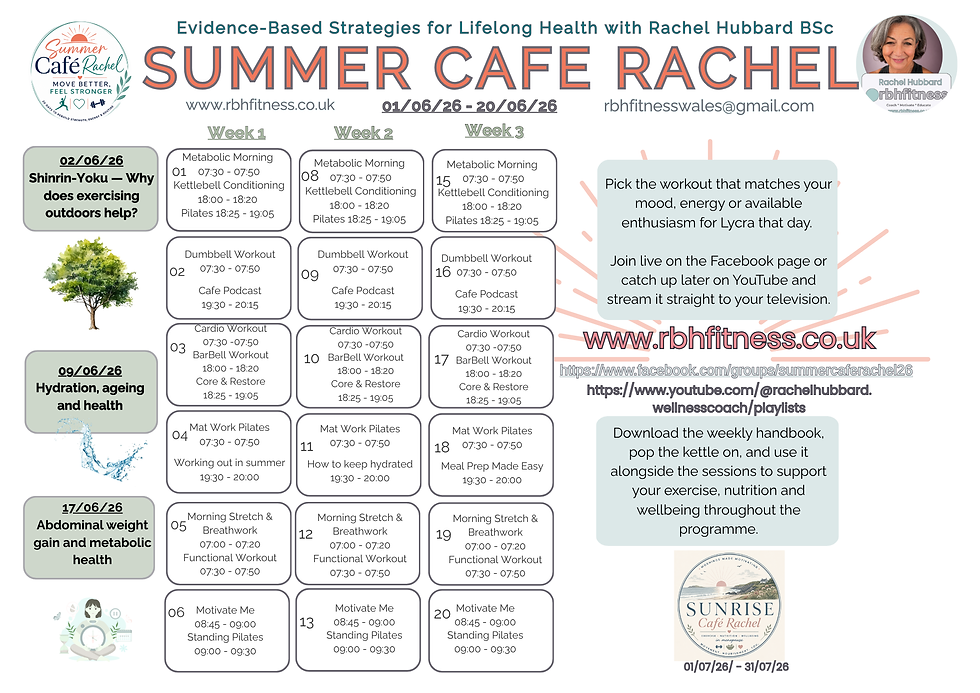
Summer Café Rachel runs from 1st–20th June 2026 and includes 20 days of structured exercise, live online sessions, educational podcasts, and unlimited access to the workout library. All sessions can be joined live or watched later at a time that suits you. If you would like to improve your fitness, learn more about your health, and enjoy the support of a friendly community, I would love you to join us. Full details and booking information can be found at www.rbhfitness.co.uk.


Different tumor cells provide a wide range of experimental materials for studying the occurrence and development of tumors and have played an important role in the in-depth study of tumor immunotherapy, tumor-targeted therapy, and tumor resistance.
Finding a consultant-led fertility clinic in London made a huge difference to my experience. I received expert guidance from my first consultation, and every decision was supported by experienced specialists who genuinely cared about achieving the best possible outcome. http://lunafertility.co.uk/